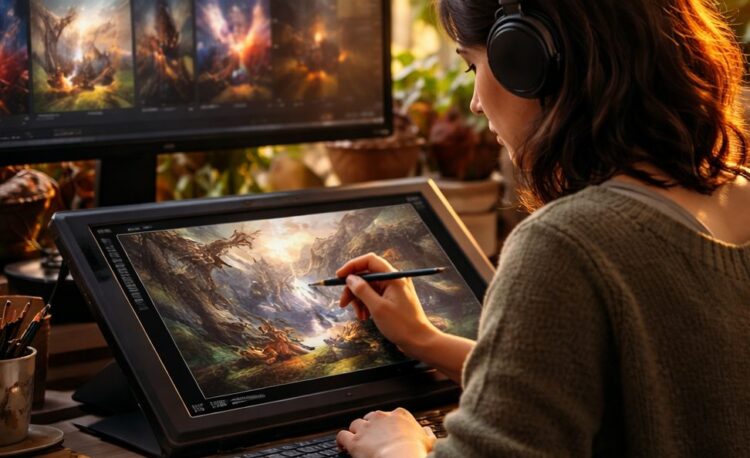
Digital fantasy art has undergone a radical transformation since the advent of advanced computer technology. Today, artists can craft intricate, otherworldly landscapes and characters without the constraints of traditional media. The shift from canvas to screen has opened new creative avenues, allowing for a broader exploration of this visionary genre. Furthermore, digital platforms offer an eco-friendly alternative by minimizing the need for physical materials, thus reducing waste and promoting sustainability within the art community.
L’essor des outils numériques
The emergence of digital tools has revolutionized the way fantasy art is conceived and produced. Software like Photoshop and Procreate has become indispensable in an artist’s toolkit, providing a myriad of brushes, textures, and effects that cater specifically to the fantastical. These tools offer unprecedented control over details, enabling artists to bring their most vivid dreams to life with ease and precision. For instance, artists can experiment with lighting and shadow effects in real-time, adjusting the ambiance of a scene until it perfectly captures the mood they envision. This flexibility encourages experimentation and innovation, leading to a more dynamic creation process.
Impact on the art community
As fantasy art becomes more accessible, it has started to solidify its presence in artistic communities worldwide. Online platforms and social media have played a significant role in this expansion. Artists can now share their work with a global audience, receive immediate feedback, and connect with others who share their passion. This increased visibility helps foster a sense of community and collaboration, pushing the boundaries of what is possible within the genre. Notably, platforms like DeviantArt and ArtStation have become hubs for artists, offering spaces where they can not only showcase their work but also engage in constructive critiques and discussions that fuel collective growth.
Innovative storytelling through visuals
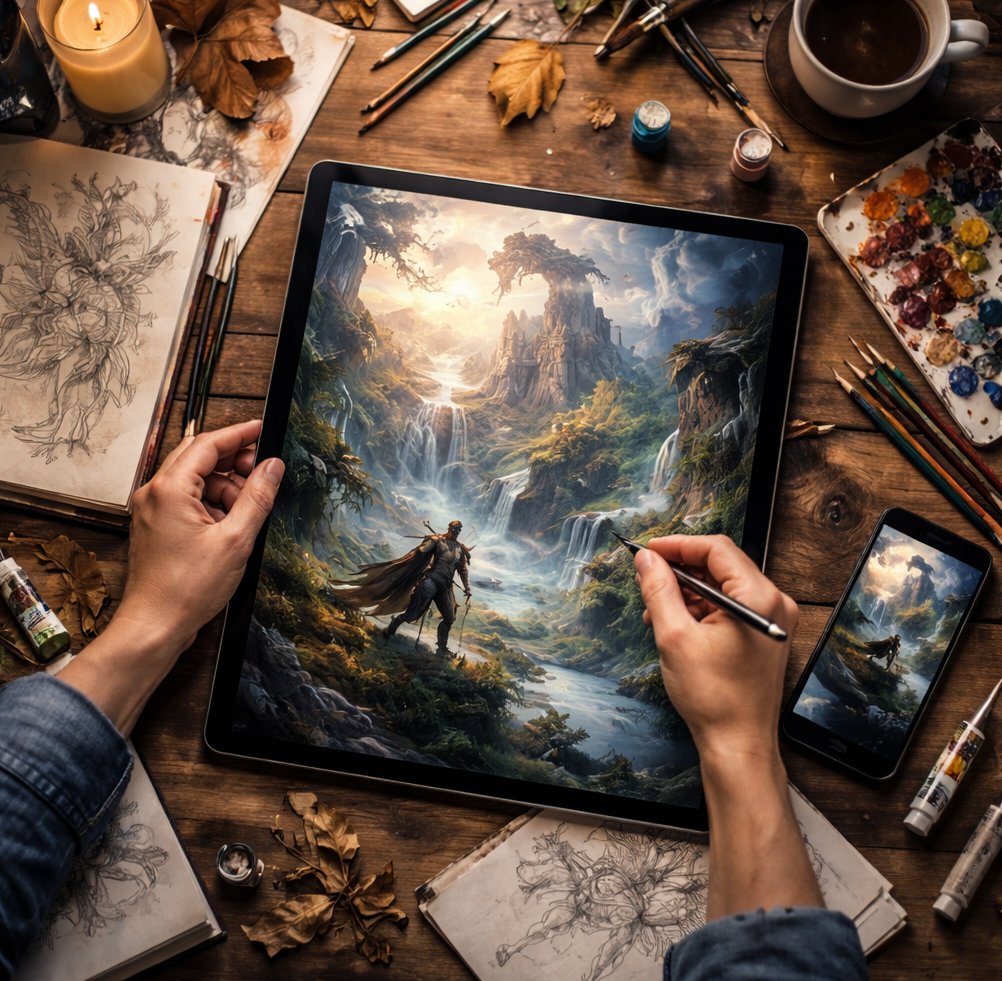
Fantasy art is not merely about creating appealing images ; it is about storytelling. The digital era has enhanced this narrative aspect, allowing artists to experiment with new techniques. Animated fantasy art, for example, has gained popularity, providing dynamic visuals that captivate viewers and immerse them in fantastical worlds. The potential for storytelling is limitless, with digital media enabling artists to embed intricate narratives within their visual creations. Some artists utilize interactive elements in their art, allowing viewers to engage directly with the story, making every interaction a unique experience.
Educational opportunities and challenges
With the rise of digital fantasy art, educational opportunities have expanded. Online tutorials, courses, and workshops are readily available, making it easier for aspiring artists to learn and develop their skills. Websites like Udemy and Skillshare offer courses ranging from basic digital painting to advanced character design techniques. However, this accessibility comes with challenges. The pressure to stand out in a saturated market can be daunting, and the rapid pace of technological advancement requires continuous learning. Artists must stay updated with the latest tools and trends to maintain relevance in the field. To navigate this environment, artists are encouraged to develop a distinct style and voice, which can become their signature in the digital art scene.
Commercial implications
The commercial landscape for fantasy art has also evolved. Digital platforms enable artists to monetize their work more effectively, whether through direct sales of digital prints or collaborations with companies in the gaming, publishing, and entertainment industries. This democratization of the market has empowered individual creators, allowing them to pursue their art as a viable career path. Not only can artists sell their artwork online, but they can also offer commissions and participate in crowd-funding campaigns to finance large-scale projects. This new model of art commerce aligns well with the independent spirit of many digital artists, who value creative freedom and financial independence.
Ultimately, the digital era has not only transformed the medium of fantasy art but also expanded its cultural significance. As technology continues to evolve, the possibilities for digital fantasy art will only grow, shaping the genre in unprecedented ways. The fusion of art and technology promises a future where creativity knows no bounds, inspiring countless artists to explore the uncharted territories of their imagination and redefine the boundaries of art itself.